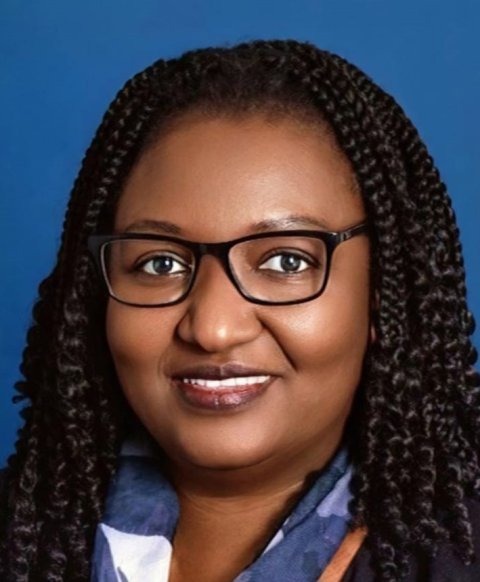
About
I’m an Associate Professor of Biostatistics in the Department of Epidemiology, Biostatistics, and Environmental Health at the Joint School of Public Health, Old Dominion University. My work sits at the intersection of statistical methodology and applied public-health research — with particular attention to cancer disparities, machine-learning approaches in health outcomes research, and the methods that let researchers draw defensible inferences from messy observational data.
I earned my PhD in Biostatistics from Virginia Commonwealth University in 2015. My dissertation developed methods for controlling confounding when association is quantified by the area under the ROC curve — work that continues to inform my thinking about propensity scores, risk prediction, and how researchers communicate predictive accuracy to non-statisticians.
Before coming to ODU I was an Assistant Professor at Eastern Virginia Medical School and a Senior Biostatistician at EVMS’s Healthcare Analytics and Delivery Science Institute. I still carry the conviction I developed there: that a biostatistician’s job is not to run tests but to be a thinking partner in the research — before the data are collected, not only after.
Affiliations
- Primary: Associate Professor (Tenured), Department of Epidemiology, Biostatistics, and Environmental Health, Joint School of Public Health, Old Dominion University — July 2025–present.
- Previously Assistant Professor at ODU (2018–2025) and at Eastern Virginia Medical School (2015–2018).
Education
- PhD in Biostatistics — Virginia Commonwealth University, 2015 Dissertation: Controlling for confounding when association is quantified by area under the ROC curve.
- BS in Statistics (Actuarial Science emphasis, Magna Cum Laude) — St. Cloud State University, 2008.
- AAS in Graphic Design — Washtenaw Community College, 2006.
- DEUG in Physics and Chemistry — Université Hassan II du Maroc, 2001.
Professional memberships & service
- American Statistical Association (ASA) — member since 2017; appointed member of the Committee on International Relations in Statistics.
- Statistics Without Borders — member and pro-bono consultant since 2010.
- American Public Health Association (APHA) — member; annual-meeting volunteer abstract reviewer.
- Virginia Academy of Science — fund-raising committee member.
- International Biometric Society — member.
Recent honors
- NIH AIM-AHEAD & NCATS Training Program — Selected Trainee, Cohort 3 (2025).
- American Statistical Association — Outstanding Teaching Award, Teaching of Statistics in the Health Sciences Section (2023).
- NIH Data Scholar — Data Science for Science Teachers Boot Camp (2021) and Harnessing Data Science for Health Discovery & Innovation in Africa (2020).
- NIH-NSF Data Science Innovation Lab Fellowship (2019).
- Crystal Apple Award for Teaching Excellence, EVMS Student Government Association (2018).
Elsewhere online
- ORCID: 0000-0003-1588-3929
- Google Scholar: scholar.google.com/citations?user=G7In2sYAAAAJ
- LinkedIn: linkedin.com/in/hadizagaladima
- ODU directory: odu.edu/directory/people/h/hgaladim
See the CV for the full record, or the Research page for publications and current projects.